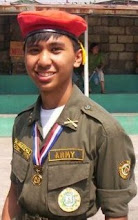
Bago ang lahat, ako at ang aking pamilya ay bumabati sa lahat ng Manigong Bagong Taon at isang Masaganang 2011 sa lahat.
The statement “to die oneself” must of course not be taken literally but figuratively.
In the Christian perspective it means to put behind all the sinful things and to start life anew. It means to be dead to sin and be alive in Christ.
As a new century unfolds, let us continue our pursuit in fulfilling our God-given mission, to spread love and be a channel of peace. May our new "New Year's Resolution" is to remain our old selves "dead."
The year 2010 was a year full of storms and tragedies in our lives individually and collectively as a nation. Yet with our fortitude and faith we managed to endure.
And here we are once again, welcoming a new challenge 2011 will dish up on us. May the God that carried us through in 2010 may once again show off his power and prove his might on 2011.
Happy New Year and may all our old selves pass away

12/29/10
5 Ways of Men to know if They Are Really In Love With A Woman
1. When you see in her your dream family. When you can picture what kind of mother she will be like to your kids.
Loving the invisible is probably the best kind of love on the planet. Invisible here is your "future family."
2. When you are willing to let go some of your wants and dreams in exchange of having her for a lifetime.
Think of a precious item in your life right now. It could be your education or your work or it could be your money or your dream car or dream motorbike or a dream life in the future. Now imagine that you are in a situation where you need to choose only one. If you choose her then you may now put a check on this item and proceed to number 3.
3. When you pray that God will grant you to her.
God, being the author of love must always be included because if not...its no love at all but a mere passion of likeness. If the author of love is not included in a relationship...there is no love.
4. When despite knowing the negative attributes youre still willing to spend a lifetime with her.
Acceptance is probably the ultimate indicator of love. When knowing the evils on her, you still long to be with the person and dream to be with her for the rest of your life just as she is.
5. When after knowing her dark past you looked at her just as the same.
Similar to number 5 acceptance also comes into play on this item.
Dark pasts may once in a while haunt an individual (especially women) and may be a hazard to a present relationship. However you must view this not as a mere hazard but also an opportunity to prove if youre really in love with the person.
Loving a person includes loving her entirety. Entirety includes the past, present and the future of the individual.
Loving the invisible is probably the best kind of love on the planet. Invisible here is your "future family."
2. When you are willing to let go some of your wants and dreams in exchange of having her for a lifetime.
Think of a precious item in your life right now. It could be your education or your work or it could be your money or your dream car or dream motorbike or a dream life in the future. Now imagine that you are in a situation where you need to choose only one. If you choose her then you may now put a check on this item and proceed to number 3.
3. When you pray that God will grant you to her.
God, being the author of love must always be included because if not...its no love at all but a mere passion of likeness. If the author of love is not included in a relationship...there is no love.
4. When despite knowing the negative attributes youre still willing to spend a lifetime with her.
Acceptance is probably the ultimate indicator of love. When knowing the evils on her, you still long to be with the person and dream to be with her for the rest of your life just as she is.
5. When after knowing her dark past you looked at her just as the same.
Similar to number 5 acceptance also comes into play on this item.
Dark pasts may once in a while haunt an individual (especially women) and may be a hazard to a present relationship. However you must view this not as a mere hazard but also an opportunity to prove if youre really in love with the person.
Loving a person includes loving her entirety. Entirety includes the past, present and the future of the individual.
11/2/10
Studying for the People
by Manuel A. Rodriguez II
Why was I studying? For who or what was I sacrificing? Partly, it was that blind belief that my parents have instilled on my mind since I was a kid. Now that I am a grown-up I realized that what was instilled on me by my parents is a blind belief in learning upon which they both had placed such reliance. Please do not get me wrong on it, blind belief as it may be but it did helped me anyway in earning a Bachelor of Arts degree back in 2009 and I thank them for that and their support.
Studying, besides being a vague struggle to escape my inheritance (poverty), which is also the inheritance of many Filipinos, it was a manifestation of a fact that exists among our fellowmen, in which accomplishment becomes a fetish.
We Filipinos have been for so long under the control of foreign powers, who look down on us from what they deem to be their pretentious standards, that our own barely audible aspirations have been strained to search for any outlet no matter what. It did not matter that our knowledge, once acquired, would be exhausted in a cramped, repressed, unproductive society.
The degree was the thing; the honor was the objective; it lifted the Filipino of the past above the sweaty mass.
And yet, THAT WAS NOT MY PURPOSE. From the beginning I wanted to be a doctor. When I was in kindergarten I was inspired by then Secretary of the Department of Health who visited our school and promoted a government health program for the children like me. I and my classmates made him a thank you card because we enjoyed his visit on our school. I will never forget that man; his name is Doctor Juan Flavier.
Dr. Flavier became a senator years later after serving in DOH. Senator Flavier is now retired on public service and yet his visit on my kindergarten more than a decade ago is still very vivid in my memory. I once said to myself that I wanted to be a doctor like Doctor Juan is.
My grandmother whom we are fondly of calling “Nanay” told me stories from the barrios during wartime. There she said, the people died without tasting a medicine, died gradually, and with suffering. The “albularyos” were the tenet, muttering magic words over cancers, tuberculosis and beri-beri. Primarily, I was interested in pediatric medicine, to save the young.
There were many things to be enjoyed in one’s short life. Even while working hard at a field, a tired farmer would look up and notice the way a line of trees lifted at the horizon and he would think that life was good. At its most miserable there was still much in it that was enjoyable.
In the barrios according to my Nanay if a child died the people bowed and said: “It is the will of God,” as they had been taught by their parish. Even as a child listening to my Nanay, It was never my will to accept it that way.
Then afterwards, I thought of studying law. I would be a lawyer for the people particularly for the rural poor (those similarly situated with the wartime barrio people my Nanay told me), not one who prosecuted them in the courts and even used the statutes which sounded good to the advantage of the landlord and the consumerist. I would defend the people with all my honesty.
During election time I listened to the candidates. Every election whether national or barangay level it was the same. “The people this, the people that.” After campaign, the word “people” was stricken from the vocabularies of the winners, who sat on their polished chairs and collected both graft and salary, equally, with both hands, form the people.
The men I admired as I grew older were all simple men who had a genuine sympathy for the people. Senator Flavier is one, for his being a doctor to the barrios, Senator Jovy Salonga for his eloquence on his faith in the public sphere, Congressman Crispin Beltran for his fortitude in advancing the interest of the working class, the militancy of Bonifacio, Rizal and his dedication. I was impressed by Joan of Arc, Rizal, and Jesus Christ because they went to their deaths for what they believed, and their beliefs were common and of the people.
I had begun to arrive, in a small way, at a philosophy, “If you do it, make sure you’ll finish it and do it with all your heart. If what you will do will benefit many people, though it threatens your happiness and safety, sacrifice your happiness and safety for your noble purpose.”
Such philosophy is my answer to the question my faith had posed on me; “What Would Jesus Do?”
Initially due to the blind belief my parents have instilled, I was studying to escape the constricted confines of poor Filipinos, but my efforts only led me to the conviction that the poor Filipinos was all important, and that I was inferior to it.
GOD BLESS THE FILIPINO.
Why was I studying? For who or what was I sacrificing? Partly, it was that blind belief that my parents have instilled on my mind since I was a kid. Now that I am a grown-up I realized that what was instilled on me by my parents is a blind belief in learning upon which they both had placed such reliance. Please do not get me wrong on it, blind belief as it may be but it did helped me anyway in earning a Bachelor of Arts degree back in 2009 and I thank them for that and their support.
Studying, besides being a vague struggle to escape my inheritance (poverty), which is also the inheritance of many Filipinos, it was a manifestation of a fact that exists among our fellowmen, in which accomplishment becomes a fetish.
We Filipinos have been for so long under the control of foreign powers, who look down on us from what they deem to be their pretentious standards, that our own barely audible aspirations have been strained to search for any outlet no matter what. It did not matter that our knowledge, once acquired, would be exhausted in a cramped, repressed, unproductive society.
The degree was the thing; the honor was the objective; it lifted the Filipino of the past above the sweaty mass.
And yet, THAT WAS NOT MY PURPOSE. From the beginning I wanted to be a doctor. When I was in kindergarten I was inspired by then Secretary of the Department of Health who visited our school and promoted a government health program for the children like me. I and my classmates made him a thank you card because we enjoyed his visit on our school. I will never forget that man; his name is Doctor Juan Flavier.
Dr. Flavier became a senator years later after serving in DOH. Senator Flavier is now retired on public service and yet his visit on my kindergarten more than a decade ago is still very vivid in my memory. I once said to myself that I wanted to be a doctor like Doctor Juan is.
My grandmother whom we are fondly of calling “Nanay” told me stories from the barrios during wartime. There she said, the people died without tasting a medicine, died gradually, and with suffering. The “albularyos” were the tenet, muttering magic words over cancers, tuberculosis and beri-beri. Primarily, I was interested in pediatric medicine, to save the young.
There were many things to be enjoyed in one’s short life. Even while working hard at a field, a tired farmer would look up and notice the way a line of trees lifted at the horizon and he would think that life was good. At its most miserable there was still much in it that was enjoyable.
In the barrios according to my Nanay if a child died the people bowed and said: “It is the will of God,” as they had been taught by their parish. Even as a child listening to my Nanay, It was never my will to accept it that way.
Then afterwards, I thought of studying law. I would be a lawyer for the people particularly for the rural poor (those similarly situated with the wartime barrio people my Nanay told me), not one who prosecuted them in the courts and even used the statutes which sounded good to the advantage of the landlord and the consumerist. I would defend the people with all my honesty.
During election time I listened to the candidates. Every election whether national or barangay level it was the same. “The people this, the people that.” After campaign, the word “people” was stricken from the vocabularies of the winners, who sat on their polished chairs and collected both graft and salary, equally, with both hands, form the people.
The men I admired as I grew older were all simple men who had a genuine sympathy for the people. Senator Flavier is one, for his being a doctor to the barrios, Senator Jovy Salonga for his eloquence on his faith in the public sphere, Congressman Crispin Beltran for his fortitude in advancing the interest of the working class, the militancy of Bonifacio, Rizal and his dedication. I was impressed by Joan of Arc, Rizal, and Jesus Christ because they went to their deaths for what they believed, and their beliefs were common and of the people.
I had begun to arrive, in a small way, at a philosophy, “If you do it, make sure you’ll finish it and do it with all your heart. If what you will do will benefit many people, though it threatens your happiness and safety, sacrifice your happiness and safety for your noble purpose.”
Such philosophy is my answer to the question my faith had posed on me; “What Would Jesus Do?”
Initially due to the blind belief my parents have instilled, I was studying to escape the constricted confines of poor Filipinos, but my efforts only led me to the conviction that the poor Filipinos was all important, and that I was inferior to it.
GOD BLESS THE FILIPINO.
10/25/10
Senador Trillanes, Ang Makabagong Bonifacio
Ni Manuel A. Rodriguez II
Giniba ni Antonio Trillanes IV ang kulturang pang eleksyon ng Pilipino noong sya ay kumandidato bilang isang Senador noong 2007. Hindi pinanganak sa isang mayaman o maiplwensyang pulitikal na pamilya, ang kanya lamang nagsilbing alas noong panahon ng kampanya ay ang kanyang pagiging kilala bilang pinuno ng “Oakwood mutiny.”
Suot ang pulang “armbands” na may tatak ng Magdalo, si Sonny Trillanes ay nag mistulang makabagong Bonifacio at rebeldeng may prinsipyong pinaglalaban – ang isabulat ang kanser ng kurapsyon na nagbibigay panganib sa buhay ng mga kapwa niya sundalo. Alam niya ang malaking kaibahan ng Batas sa Hustisya, sinuway man nya ang batas sa pagiging isang rebelde, ito ay para mabigyang daan ang Hustisya na siyang may mas mabigat na importansya.
Taon 2007, hindi man makasabay sa mga makukulay na kampanya ng mga kapwa nya kandidato, si Trillanes ay nagwagi dahil sa mga boto ng mga ordinaryong tao at hindi ng mga elitista at mayayaman. Si “Senador Trillanes” ay likha hindi ng maimpluwensya kundi ng masang Pilipino.
Nakakalunkot isipin ngunit simula ng kanyang pagkapanalo sa halalan ng 2007, ang kanyang opisina sa Senado ay nananatiling bakante dahil sa kanyang pagiging “detainee” sa Camp Crame.
Gayunpaman, hindi napipigilan ng rehas at kunkretong pader ng Camp Crame ang kagustuhan mg mabuting Senador na gampanan ang kanyang tungkulin at huwag biguin ang milyong Pilipino na nagbigay ng suporta.
Kailan lamang ay naglabas si Senador Trillanes ng resolusyon na magsagawa ng hearing ukol sa Memorandum na inilabas ng Commission on Higher Education (CHED) at ng Professional Regulatory Commission (PRC) na nagpapabawal sa mga graduates ng mga State Universities and Colleges na makakuha ng licensure examinations kung ang kanilang paaralan ay hindi naka kuha ng permit mula sa Commission. Maraming public na Unibersidad at Kolehiyo ang nag kwestiyon sa memorandum na ito sapagkat hindi iyon produkto ng konsultasyon sa kanilang pagitan.
Ipit sa kalagitnaan ng debateng ukol sa nasabing Memorandum ay ang libo-libong graduate ng Nursing, Accountancy at Engineering, na syang nangangailangan makakuha ng licensure examination.
Inilabas ng Senador ang resolusyon na magsagawa ng hearing ukol dito sa kanyang kakayahan bilang Chairperson ng Senate Committee on Civil Service and Government Reorganization.
Pitong taon at tatlong buwan na ang minalagi ng Senador sa kulungan. Sa kabila ng “Oakwood Mutiny,” labing-isang milyon ang bumoto sa kanya para sa Senado.
Kamakailan lamang pinirmahan ni Pangulong Aquino ang “amnesty” ni Senador Trillanes at ng ibang rebeldeng kasangkot sa “Oakwood mutiny.” Oras na lamang ang inaantay ayon kay Senador Sotto para sa kalayaan ng rebeldeng senador.
Magiging maganda sa paningin ng mga tagasuporta na makita nila ang Senador na lumakad palayo sa kanyang kulungan at tumungo sa kanyang opisina sa Senado. Marami na ang oras na nasayang at marami pa ang kanyang dapat gawin.
Mayroon pa siyang kinabukasang dapat bigyang katuparan, pamilyang dapat ipagbuklod muli, at Republikang dapat ipaglaban bilang Senador ng masang Pilipino.
Senador Antonio Trillanes, ang makabagong Gat Andres Bonifacio.
Giniba ni Antonio Trillanes IV ang kulturang pang eleksyon ng Pilipino noong sya ay kumandidato bilang isang Senador noong 2007. Hindi pinanganak sa isang mayaman o maiplwensyang pulitikal na pamilya, ang kanya lamang nagsilbing alas noong panahon ng kampanya ay ang kanyang pagiging kilala bilang pinuno ng “Oakwood mutiny.”
Suot ang pulang “armbands” na may tatak ng Magdalo, si Sonny Trillanes ay nag mistulang makabagong Bonifacio at rebeldeng may prinsipyong pinaglalaban – ang isabulat ang kanser ng kurapsyon na nagbibigay panganib sa buhay ng mga kapwa niya sundalo. Alam niya ang malaking kaibahan ng Batas sa Hustisya, sinuway man nya ang batas sa pagiging isang rebelde, ito ay para mabigyang daan ang Hustisya na siyang may mas mabigat na importansya.
Taon 2007, hindi man makasabay sa mga makukulay na kampanya ng mga kapwa nya kandidato, si Trillanes ay nagwagi dahil sa mga boto ng mga ordinaryong tao at hindi ng mga elitista at mayayaman. Si “Senador Trillanes” ay likha hindi ng maimpluwensya kundi ng masang Pilipino.
Nakakalunkot isipin ngunit simula ng kanyang pagkapanalo sa halalan ng 2007, ang kanyang opisina sa Senado ay nananatiling bakante dahil sa kanyang pagiging “detainee” sa Camp Crame.
Gayunpaman, hindi napipigilan ng rehas at kunkretong pader ng Camp Crame ang kagustuhan mg mabuting Senador na gampanan ang kanyang tungkulin at huwag biguin ang milyong Pilipino na nagbigay ng suporta.
Kailan lamang ay naglabas si Senador Trillanes ng resolusyon na magsagawa ng hearing ukol sa Memorandum na inilabas ng Commission on Higher Education (CHED) at ng Professional Regulatory Commission (PRC) na nagpapabawal sa mga graduates ng mga State Universities and Colleges na makakuha ng licensure examinations kung ang kanilang paaralan ay hindi naka kuha ng permit mula sa Commission. Maraming public na Unibersidad at Kolehiyo ang nag kwestiyon sa memorandum na ito sapagkat hindi iyon produkto ng konsultasyon sa kanilang pagitan.
Ipit sa kalagitnaan ng debateng ukol sa nasabing Memorandum ay ang libo-libong graduate ng Nursing, Accountancy at Engineering, na syang nangangailangan makakuha ng licensure examination.
Inilabas ng Senador ang resolusyon na magsagawa ng hearing ukol dito sa kanyang kakayahan bilang Chairperson ng Senate Committee on Civil Service and Government Reorganization.
Pitong taon at tatlong buwan na ang minalagi ng Senador sa kulungan. Sa kabila ng “Oakwood Mutiny,” labing-isang milyon ang bumoto sa kanya para sa Senado.
Kamakailan lamang pinirmahan ni Pangulong Aquino ang “amnesty” ni Senador Trillanes at ng ibang rebeldeng kasangkot sa “Oakwood mutiny.” Oras na lamang ang inaantay ayon kay Senador Sotto para sa kalayaan ng rebeldeng senador.
Magiging maganda sa paningin ng mga tagasuporta na makita nila ang Senador na lumakad palayo sa kanyang kulungan at tumungo sa kanyang opisina sa Senado. Marami na ang oras na nasayang at marami pa ang kanyang dapat gawin.
Mayroon pa siyang kinabukasang dapat bigyang katuparan, pamilyang dapat ipagbuklod muli, at Republikang dapat ipaglaban bilang Senador ng masang Pilipino.
Senador Antonio Trillanes, ang makabagong Gat Andres Bonifacio.
9/8/10
A DEMOCRATIC CREED
University of Sto. Tomas
Faculty of Arts and Letters
(Standard creed of UST Students' Democratic Party, political party founded on June 12,1981)
We believe in the dignity of man and the worth and value of every living soul, no matter in what body housed, no matter whether born in comfort or born in poverty, no matter to what stock he belongs, what creed he professes, what job he holds.
We believe that every man should have a free and equal chance to develop his best abilities under a free system of government, where the people themselves choose those who are to rule them and no one can set himself up as a tyrant or oppress the many for the benefit of the few.
We believe that free speech, free assembly, free election, free practice of religion are cornerstones of such a government.
We believe in justice and law. We do not believe in curing an evil by substituting it with another evil. We are unalterably opposed to class hatred, race hatred, however manifested by whosoever instilled.
We believe that political freedom implies and acknowledges personal and economic responsibilities. We do not believe that any state is an admirable state that lets its people go hungry when they might be fed, ragged when they might be clothed, sick when they might be well, workless when they might have work. We believe that it is the duty of all of us, to see to it that such conditions are remedied wherever and whenever they existed in our country.
We know that our democratic system is not perfect. We know that it permits injustices and wrong. But with our whole hearts we believe in its continuous power of self-remedy. The power is not a theory—it has been proven. Through the years, democracy had given more people freedom, less persecution, and a higher standard of living than any system we know. Under it, evils have been abolished, justice remedied, old wounds healed, not by terror and violent revolution but by peaceful revolution of consent in the minds of the people. While we maintain democracy, we maintain the greatest power people can possess—the power of gradual, efficient, and lawful change.
Most of all, we believe in democracy itself—in its past, its present and its future—in democracy as a political system to live by—in democracy as the great hope in the minds of the free. We believe it is deeply rooted in the earth of this country that neither assault from without nor dissension from within can ever wipe it entirely from the earth. But, because it was established for us by the free-minded and the daring, it is our now, in danger as in security, to uphold and sustain it with all that we have and are. We believe that its future shall and must be even greater than its past. And to the future—as to the past of our forebears and the present of our hard won freedom—we pledge all we have to give without any material reservation or purpose of evasion.
Faculty of Arts and Letters
(Standard creed of UST Students' Democratic Party, political party founded on June 12,1981)
We believe in the dignity of man and the worth and value of every living soul, no matter in what body housed, no matter whether born in comfort or born in poverty, no matter to what stock he belongs, what creed he professes, what job he holds.
We believe that every man should have a free and equal chance to develop his best abilities under a free system of government, where the people themselves choose those who are to rule them and no one can set himself up as a tyrant or oppress the many for the benefit of the few.
We believe that free speech, free assembly, free election, free practice of religion are cornerstones of such a government.
We believe in justice and law. We do not believe in curing an evil by substituting it with another evil. We are unalterably opposed to class hatred, race hatred, however manifested by whosoever instilled.
We believe that political freedom implies and acknowledges personal and economic responsibilities. We do not believe that any state is an admirable state that lets its people go hungry when they might be fed, ragged when they might be clothed, sick when they might be well, workless when they might have work. We believe that it is the duty of all of us, to see to it that such conditions are remedied wherever and whenever they existed in our country.
We know that our democratic system is not perfect. We know that it permits injustices and wrong. But with our whole hearts we believe in its continuous power of self-remedy. The power is not a theory—it has been proven. Through the years, democracy had given more people freedom, less persecution, and a higher standard of living than any system we know. Under it, evils have been abolished, justice remedied, old wounds healed, not by terror and violent revolution but by peaceful revolution of consent in the minds of the people. While we maintain democracy, we maintain the greatest power people can possess—the power of gradual, efficient, and lawful change.
Most of all, we believe in democracy itself—in its past, its present and its future—in democracy as a political system to live by—in democracy as the great hope in the minds of the free. We believe it is deeply rooted in the earth of this country that neither assault from without nor dissension from within can ever wipe it entirely from the earth. But, because it was established for us by the free-minded and the daring, it is our now, in danger as in security, to uphold and sustain it with all that we have and are. We believe that its future shall and must be even greater than its past. And to the future—as to the past of our forebears and the present of our hard won freedom—we pledge all we have to give without any material reservation or purpose of evasion.
8/21/10
AKBAY NG KARAMAY

"Akbay ng Karamay"
Paint on canvass, August 20, 2010
Ang mga tauhan sa larawan ay magkaakbay, ito ay nagpapakita ng matibay na samahan sa kabila ng sari-saring pagsubok ng panahon, mundo at ng Maykapal.
Luntian ang piniling kulay ng kapaligiran ng mga tauhan sa larawan, ito ang kulay na sumisimbolo sa temporal na mundo na kapwa nating kinabibilangan. Ang tubig na kulay asul sa ilalim ng mga tauhan ay tanda ng hirap sa bawat paghakbang ng ating bawat paglalakbay sa ibat-ibang kabanata ng buhay ng bawat isa.
Ang araw at mga asul na patak ng ulan ay sumisimbolo sa bawat panahon na susubok sa pagsasama ng dalawang tao, ang mukha ng haring araw ay ginawang may luha tanda ng mga panahon ng poot at kalungkutan.
Ang lumiliyab na puno sa kanang bahagi ay simbolo ng prisensya ng may kapal, ito ay hango sa lumang testamento ng Bibliya kung saan nagpakita ang Panginoon kay Moises sa anyo ng lumiliyab na puno.
Ang kabuuan ng larawan nawa ay maging tanda sa bawat isa na walang tao ang ligtas sa poot, kalungkutan at pagkakadapa. Upang makabangon at makalaban muli, tayo ay magbalikatan upang maitaguyod ang isa at kailangan nating maalala muli ang pag tanglaw sa Diyos at pag tawag sa kanyang pangalan.
8/18/10
Democracy on Altar Pulpit:The role of Christian Churches on democracy issues
by MANUEL A. RODRIGUEZ
I am a strong believer of democracy, particularly in the Philippines. The democracy here in our country can be traced not only to the Malolos Congress of 1899 wherein our forefathers drafted the first Filipino Constitution but to the pre-hispanic settlers on these islands who sailed to freedom from tyrannical monarchs to organize themselves into barangays, named after their boats that conveyed them to their new homeland where the nurtured democracy by governing themselves through compromise and consultations led by their datu or sultan.
The Philippines after undergoing a tyranny in the hands of foreigners, the barangays continue to build the legacy of people’s burning passion for freedom and liberty. Lapu-lapu of Mactan, Raja Sulayman, Jose Rizal, Andres Bonifacio, General del Pilar, Jose Abad Santos, Ninoy Aquino, the GOMBURZA, Dagohoy, Emilio Jacinto, Diego and Gabriela Silang, the martyrs and heroes of Bataan, Cavite and EDSA and the countless heroes of the FIilipino Race including the modern day heroes and statesmen that are on struggle to keep the flame of liberalism alive are testimonies that Filipino people by nature are free men and not born to bondage.
Hence I believe that the teaching of democracy must be included in the educational system of the youth. The perpetuation of the flame of democracy must be done in this land of liberty in Asia, the Philippines.
The Philippines is known throughout the world as a Christian nation. But are we Christian enough in adhering to the mandate of our faith as a Nation? The emphasis of early Christianity was an element of the primary assumptions on which democracy developed its faith in the indispensable impartiality of all men. Catholic theologians St. Augustine and St. Thomas Aquinas upheld liberty as rights of the members of a community. The Christian idea of equality which can be traced form the Jewish tradition and the diction of the Christ himself and elaborated by his apostle Paul, was that all men are equal before God, being descended from the same first parents, who were created by God, and being redeemed by the death of Jesus Christ, and hence are all brothers and can boast no distinction one over the other because of fortune, race or other accidental inequalities. This makes me remember the much-quoted dictum from one of the most celebrated Pope of the Catholic faith Pope Gregory the Great; “All men are by nature equal.”
In these times, bearing in mind the history and culture of the Filipinos and the teachings of the Christian faith in general (both Catholics and Protestants), democracy is the political scheme that is most in consonance with the Christian faith of most Filipinos, among others, for the reason that mutually democracy and Christianity struggle for the preponderance of truth, human rights and the moral and socio-economic expansion and well-being of the individual.
How can democracy get its kick-off in a nation which has never known it? There comes the role of education in democracy. The education of the Filipino youth must, as a vital primary step, locate itself and the purpose of its instruction in the proper cultural setting. By this I mean that education must take into realization the fact that ours is a Christian society which must be instilled by democracy rooted on Christian values.
While I discuss the role of education, let this not be a limit on the term “education” as referring to the role of the degree conferring Schools, Colleges and Universities of the Philippines. What is contemplated on the term “education” is the role that we ought to perform in rearing the youth of today, this may happen not only in the school set up but also in the comforts of the family home, in an intimate discussion with the youngsters and as a preaching or sermon in Church. Yes, in Church. The Filipino Christian Churches (Catholics and Protestants) never failed to adhere to its mandate in making disciples of every nation and propagating the faith probably because it is one of the obvious purposes of being a Church, however most Churches seemed to overlook a mandate…the mandate to teach democracy and instill nationalism on their respective congregations.
On the palace of the Viceroy of India there inscribed a motto: “Liberty will not descend to a people; a people must raise themselves to liberty.” Democracy cannot succeed until a people agree to it and inscribe its precepts in their minds and hearts. It must become a part of their nature, their culture, their everyday living and that takes generations and there is no time to start than now.
To start the education on Christian democracy, let us start by accepting that democracy is a process and not a set form. It is in a way a continuous revolution. It never lays claim as a perfect system for it is not a fixed system but a procedure. You, bearing these in things in mind as regards to democracy are my hope that you will continue to nurture the education on democracy. The influence of religious congregations that believes in the teachings of Jesus Christ must be taken advantage in advancing this political system.
Christians, let us be vigilant in protecting and perpetuating this wonderful gift we received from the fountain of justice and wisdom himself, Democracy. God bless the Philippines.
I am a strong believer of democracy, particularly in the Philippines. The democracy here in our country can be traced not only to the Malolos Congress of 1899 wherein our forefathers drafted the first Filipino Constitution but to the pre-hispanic settlers on these islands who sailed to freedom from tyrannical monarchs to organize themselves into barangays, named after their boats that conveyed them to their new homeland where the nurtured democracy by governing themselves through compromise and consultations led by their datu or sultan.
The Philippines after undergoing a tyranny in the hands of foreigners, the barangays continue to build the legacy of people’s burning passion for freedom and liberty. Lapu-lapu of Mactan, Raja Sulayman, Jose Rizal, Andres Bonifacio, General del Pilar, Jose Abad Santos, Ninoy Aquino, the GOMBURZA, Dagohoy, Emilio Jacinto, Diego and Gabriela Silang, the martyrs and heroes of Bataan, Cavite and EDSA and the countless heroes of the FIilipino Race including the modern day heroes and statesmen that are on struggle to keep the flame of liberalism alive are testimonies that Filipino people by nature are free men and not born to bondage.
Hence I believe that the teaching of democracy must be included in the educational system of the youth. The perpetuation of the flame of democracy must be done in this land of liberty in Asia, the Philippines.
The Philippines is known throughout the world as a Christian nation. But are we Christian enough in adhering to the mandate of our faith as a Nation? The emphasis of early Christianity was an element of the primary assumptions on which democracy developed its faith in the indispensable impartiality of all men. Catholic theologians St. Augustine and St. Thomas Aquinas upheld liberty as rights of the members of a community. The Christian idea of equality which can be traced form the Jewish tradition and the diction of the Christ himself and elaborated by his apostle Paul, was that all men are equal before God, being descended from the same first parents, who were created by God, and being redeemed by the death of Jesus Christ, and hence are all brothers and can boast no distinction one over the other because of fortune, race or other accidental inequalities. This makes me remember the much-quoted dictum from one of the most celebrated Pope of the Catholic faith Pope Gregory the Great; “All men are by nature equal.”
In these times, bearing in mind the history and culture of the Filipinos and the teachings of the Christian faith in general (both Catholics and Protestants), democracy is the political scheme that is most in consonance with the Christian faith of most Filipinos, among others, for the reason that mutually democracy and Christianity struggle for the preponderance of truth, human rights and the moral and socio-economic expansion and well-being of the individual.
How can democracy get its kick-off in a nation which has never known it? There comes the role of education in democracy. The education of the Filipino youth must, as a vital primary step, locate itself and the purpose of its instruction in the proper cultural setting. By this I mean that education must take into realization the fact that ours is a Christian society which must be instilled by democracy rooted on Christian values.
While I discuss the role of education, let this not be a limit on the term “education” as referring to the role of the degree conferring Schools, Colleges and Universities of the Philippines. What is contemplated on the term “education” is the role that we ought to perform in rearing the youth of today, this may happen not only in the school set up but also in the comforts of the family home, in an intimate discussion with the youngsters and as a preaching or sermon in Church. Yes, in Church. The Filipino Christian Churches (Catholics and Protestants) never failed to adhere to its mandate in making disciples of every nation and propagating the faith probably because it is one of the obvious purposes of being a Church, however most Churches seemed to overlook a mandate…the mandate to teach democracy and instill nationalism on their respective congregations.
On the palace of the Viceroy of India there inscribed a motto: “Liberty will not descend to a people; a people must raise themselves to liberty.” Democracy cannot succeed until a people agree to it and inscribe its precepts in their minds and hearts. It must become a part of their nature, their culture, their everyday living and that takes generations and there is no time to start than now.
To start the education on Christian democracy, let us start by accepting that democracy is a process and not a set form. It is in a way a continuous revolution. It never lays claim as a perfect system for it is not a fixed system but a procedure. You, bearing these in things in mind as regards to democracy are my hope that you will continue to nurture the education on democracy. The influence of religious congregations that believes in the teachings of Jesus Christ must be taken advantage in advancing this political system.
Christians, let us be vigilant in protecting and perpetuating this wonderful gift we received from the fountain of justice and wisdom himself, Democracy. God bless the Philippines.
Subscribe to:
Posts (Atom)

- Manuel A. Rodriguez II
- Professor of "The Humanities" at the Lyceum of the Philippines University. Law Student at the Far Eastern University, Institute of Law. President and former Auditor of Legal Network for Truthful Elections (UST Chapter) Former Vice President- Internal of Batas Tomasino: The UST Law Society, Former Chairperson of UST-Students' Democratic Party. Former Vice President- Internal of UST UNESCO. Former Public Relations Officer (PRO) of UST Arts and Letters Student Council. Former Vice President Internal of Community Achievers' Association (UST-AB). Bachelor of Arts in Legal Management (University of Santo Tomas, '09) High School Education (Christian Academy of Manila, '05)